Tag Archives: Tracking children

RFID for pupil attendance not fit for purpose

Northside Independent School District (NSID), San Antonio, Texas, have scrapped the 433 MHz active RFID tracking technology used to log students in school.  It was claimed tracking children with RFID would improve attendance.  In reality it made virtually no difference whatsoever.  “student attendance increased by only 0.5 percent on the high school campus where the program was tested. Results at the middle school campus were even lower, at 0.07 percent.”

What it did do was made for a good exercise to see how tagging kids with 433MHz – the same frequency used by the Department of Defense, Homeland Security and NATO to track their assets around the USA – worked in a civilian population.

With Skyview (aptly named) High School recently installing active RFID tags for staff and students working with wifi 2.4GHz for “safety” reasons, on the back of Sandy Hook, and knowing that RFID to improve attendance is a dead duck in the water, maybe the focus on perceived and totally unproven safety aspects of RFID at NSID may com into play – lets hope not.

Green light to RFID track Oregon’s school children?

USA – Oregon Senate passed a bill on 11th June 2013 seemingly giving schools the right to impose RFID tracking on it’s students.  However HB2386 appears to have started life back in January 2013 with exactly the opposite intent, reading that:

HB2386Prohibits school district from requiring student to wear, carry or use any item with radio frequency identification device if device is used for purpose of locating or tracking student or taking attendance.

The original January 2013 wording goes on to say that a school may use RFID to track property, such as instruction manuals and electric items, but if a student takes possession of said property the school must inform the student that the property, therefore the student, is being tracked.

The American Civil Liberties Union (ACLU) urged members of the Oregon Senate to sign the bill stating that this “Common sense proposal is critical to protect the privacy of our students” with information being communicated transparently about the use and option to use RFID

What could possibly go wrong?

By June 2013 the wording and intent of the bill changed substantially, to read:

HB2386 “Directs State Board of Education to adopt standards for school district board to incorporate into any policy that requires student to wear, carry or use item with radio frequency identification device for purpose of locating or tracking student or taking attendance.

This rewriting of HB2386 seems to go on to say that a Oregon school district cannot require a student to wear RFID for tracking unless the Oregon State Board adopts standard rules about the use of RFID with children, as decided upon as in the above statement.  This appears to read that if a school wants to impose RFID tracking on students the State Board has to agree to it under (their own) standards/rules.  Informing a student of the fact they may be carrying a RFID tracked object has also been dropped from the wording of the original text.

…yet point 2 (c) states that the bill would allow for “…a student or a parent of a student to choose not to have the student wear, carry or use an item with a radio frequency identification device.” (?)  Can a student not consent when a school has required it to carry RFID tracking, backed by the State Board?  Is this another court case waiting to happen?

The bill takes effect as of July 2013.  The history of the bill going through the Oregon Senate is here.

Currently Oregon does not use RFID to track students in any of it’s schools, so maybe a little strange they have spent senate time on this bill.  But with other schools in the US introducing RFID for financial (funding according to attendance) and “safety” reasons, perhaps this comes as no surprise in that Oregon does not want a situation similar to the adverse publicity the Hernandez case in Texas brought to school boards RFID tracking students – better to set the ground rules first.

Oregon StateWith over 850,000 children in Oregon, with 550,000 K-12 students, there is a fairly healthy market for RFID systems with perhaps this bill giving a green light to the RFID industry that these schools are good to go.  

How sad that HB2386 has been changed with the potential to destroy children’s rights and civil liberties, when there was a great chance to preserve the next generation’s freedoms and our societies integrity in respecting our children’s privacy.

Corporate sponsoring of RFID GPS tracked children

A school district in Northern California is to start tracking children on and off schools buses via RFID and GPS technology.  The system is free to the district, taxpayers and parents with local businesses sponsoring the messages sent to parents phones to tell them their child is safe at school.

The company East Coast Diversified Corporation (ECDC), the parent group of StudentConnect, is enabling this RFID tracking technology to be financed using adverts sponsored by local businesses.

According to ECDC this tracking of children “creates a unique opportunity for businesses to demonstrate a policy of corporate responsibility toward student safety in communities they do business with“.  Advertisers can engage “the brand loyalty of parents out of appreciation for receiving safety notification regarding their children.”

This just sounds bizarre.  What shop would want to sponsor tracking a child?  Eroding that child’s privacy.  Are society’s ethics and morals to be discarded for “corporate responsibility” – trading safety messages about location tracking of our children in exchange to be advertised at?  Do we not trust the bus driver, schools and society to show a collective care for our youngest?

Yes, there are random acts of violence that defy logic or reason but when statistics are scrutinized both from the industry selling this technology and real risks that do exist, possible perceived scenarios – that involve compromising children rights more than they do protecting their safety – arise offering a financial solution to a situation that is not that urgent and disproportionate to the reported transport crisis.

There is money to be made in tracking children, that is for sure.

“Good morning.  Your child has arrived safely at school.  Oh, and by the way, your local hardware shop is offering 99% off sledge hammers to a crack nut with”

We should have more faith in society to care for our children collectively.  All members of society, community, family, corporate, faith based, all aspects should care for all.  We should not rely on a money driven system to take responsibility for our children, nor be led into believing that that is where responsibility lies.

Surely as a society, whatever country or community you live in, we should all take a part in looking out for each other and not be driven in this supposed care for our children from a financial incentive.

What is the cost of active RFID UWB tagging students at West Cheshire College?

You’d have though some simple questions on cost and funding may have been easy to answer, especially when you are investing in a state of the art, military standard, ultra wideband RFID tagging system for tracking children in real time?   It would seem not.

UWB RFID tracking students at West Cheshire College

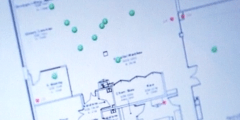
West Cheshire College, according to the RFID Journal, started tracking students in 2010 with active RFID tags emitting a radio frequency signal, over 300 feet every second, to sensors around the college to pinpoint the students position to an accuracy within 1 meter – featuring some of most sophisticated RFID capabilities on the market. 

According to the college, the Chief Executive/Principal, a role held by Sara Mogel, was responsible for the New Buildings project at the College under which the RFID tracking system was installed.   So great a return on investment the RFID system proved to be, that the college’s Business Area Services Manager, Kevin Francis, went to Florida, USA, in April 2012 to give a presentation at an international RFID conference of how successful UWB RFID was at tracking kids.

So how much does this cost the British tax payer and how was the RFID and was funded?   To cut a very long exchange of  Freedom of Information Request (FOIR) and West Cheshire College’s replies short (which can be read here) apparently this is how a state of the art RFID student tracking system is procured at one of the UK’s largest Further Education colleges: 

Finance – West Cheshire college cannot be clear if the system was purchased, if it was purchased they cannot  find the cost.  The word “impossible” was used.

Implementation  – The college does not hold nor can provide any documents or records whatsoever on any discussions about the implementation of the RFID system.

Supplier – The college claim they have had no contact with the supplier,  Zebra Technologies, at all.   Zebra had on their website a videoOptimising the learning experience with a Zebra Location Solution” of the college, staff and students promoting the real time student tracking system.   This would seem to highlight that a company can film the college, staff and students without contact with the college at all.

Lack of Information – Members of staff that have left have been cited as a reason for the college not being able to provide information under its obligation to the Freedom of Information Act.  

Staff trip to Florida – West Cheshire College hold no documents or records about sending a member of staff to another continent to present the college’s use of UWB RFID to the RFID industry.  The college states that “In such cases there are no costs presented to the college and all matters are settled by the sponsors.”   Does this apply to this case/trip?  They have no documents on it either way, so maybe not?  Who knows?
Against RFID in schools

Student Consent and privacy -The college cannot be clear on how consent from students has been gained, whether any privacy impact assessments have been carried out.  They could not be clear on the specification of the RFID used to track the students.  These unanswered questions on consent and privacy, asked under the Freedom of Information Act, are now lodged  as an official complaint with the Information Commissioner’s Office.

Either West Cheshire College’s understanding of the Freedom of Information Act is extremely poor or the college’s answers under the Freedom of information Act raise some serious questions about what is going on at the college as a whole.  If West Cheshire College’s responses under the Freedom of Information Act are to be believed – which they must as the college has obligation under the law to respond truthfully – then practices at the college appear to highlight serious breaches of student consent, privacy, audit trails, accountability, transparency and security.  This would be quite astonishing.

The seriousness of child/student welfare should be of absolute paramount concern to any educational establishment acting in parentis locus and replies given under the Freedom of Information Act must be taken seriously – to this extent the Information Commissioner’s Office who oversees the Freedom of Information Act and Data Protection Act has been made fully aware of this situation.

We will let the penultimate slide of Kevin Francis’s presentation to the RFID Industry last April 2012, sum up:   “West Cheshire College – a first in the Education sector”

RFID and GPS “not a tracking device”

School busStudentConnect are providing RFID and GPS in school buses in the Gordon County School District, Georgia, USA to monitor students travel movements.

Apparently Andrej Jeremic, Director of Marketing and Business Development at East Coast Diversified the company that owns StudentConnect, stated that their system using RFID and GPS, is not a tracking device”  “…it is a notification system”. 

Yes Andrej, it is a notification system that notifies you of students tracks traveling on school buses (face palm!)

photo (1)

Even his own website states in the document ‘StudentConnect Market Research’ it states “Parents can track all of their children’s activities

Oddly enough, this ‘StudentConnect Market Research‘ document is research that another employee Kayode Aladesuyi, East Coast Diversified’s Chairman and Chief Officer, claims is an “independent research study” showing that 96% of parents would support a safety program that requires students to wear an auto ID badge.

There does not appear to be cited within the document any independent research company that carried out the survey.  The survey deployed 13,573 surveys with only 958 returned – that’s only 7% of people asked bothered to reply – perhaps the replies were from people who were positive about the technology?

Sadly, apart from children’s privacy and civil liberties being eroded, there seems an air of shabbiness along with a distinct hint of desperateness to sell us this type of tracking by remote ubiquitous technology that involves a lack of integrity and transparency.